


How A Lawyer Uses Podcasting To Get 10 New Leads And 2 New Clients Each Week
The full case study: what Amanda did, what happened in the first six weeks, and where her show is ten years later. How independent professionals use a podcast to win better clients
Work out your own numbers: a 5-minute worksheet on what one client is worth to you, and what getting known would cost. What is one client worth to you?
Short answer
Amanda Farmer, a Sydney strata lawyer, says her podcast brings in up to 10 enquiries a week, and on average two of those become clients. Apart from the podcast itself, she spends no money on marketing.
Nearly two years in, she says the bigger gain is authority in her sector. She now gets asked to speak at industry conferences, and the people she has interviewed come up to her there.
Key takeaways
- Up to 10 enquiries a week, about two new clients. People find the show or its website, then phone or email her team with a problem. Her email list also grows by about 20 people a week.
- No other marketing spend. She doesn't sponsor events or advertise in industry magazines, which her competitors pay for. Her editor and virtual assistant cost far less than five or ten thousand dollars on a conference.
- Interviews build relationships in the sector. People she has had on the show greet her at conferences. Asking someone onto the show is also an easy way to introduce herself.
- A regular co-host solves the "what do I record this week" problem. She records a recurring segment with strata manager Reena Van Aalst about their week. Listeners tell them they like the rapport.
- Batch the recording and hand off the rest. She records two or three interviews on one or two days a month, and had interviews booked until the following June. An editor and her team do the production, so she stays on the legal work.
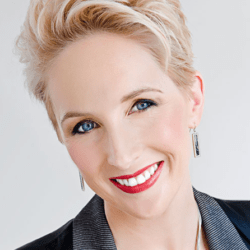
Amanda Farmer is the owner of Lawyers Chambers on Riley, a boutique Strata specialist firm in New South Wales. Amanda sits on the Council of the Australian College of Community Association Lawyers with over 14 years of experience in the strata sector.
Her passion is to educate strata owners and that led to her podcast “Your Strata Property”. You can access it at YourStrataProperty.com.au. The Your Strata Property Podcast (and website) launched in 2016 and receives thousands of downloads each month due to popular demand. The podcast has now expanded to include an online membership community for strata owners and managers who seek reliable information and resources for Community Living.
Amanda is also the founder of Women in Strata – a networking group for women working in strata management.
Related Episodes:
- 080. [Case Study] From $0K – $10K In Six Weeks Without Spending A Cent On Traditional
- 043. Membership Economy with Robbie Kellman Baxter
- 075. Joe Pulizzi — Founder of Content Marketing Institute — Does Your Content Fit Into Your Buyer’s Journey?
- 116. Brian Clark — Founder of Copyblogger — On How To Create Content That Converts, Empathy Maps, How To Use Content To Build An Eight Figure Business and Lots More!
Books Mentioned:

Key Points and Insights
- 2:54 – Recap on key points discussed in the first part of this (ongoing) case study in episode 80
- 12:15 – How Amanda has used podcasting to grow her business without spending a cent on traditional marketing
- 13:57 – Outsourcing and how to use it to grow your business effectively
- 17:13 – Why it’s important to focus on your area of expertise (specialization) and work at or above your effective hourly rate
- 19:37 – How Amanda created a passive income stream through her membership sites
- 23:04 – Putting in hard work to set up a membership site is critical at first
- 26:38 – How to build powerful relationships through podcasting
- 29:27 – Podcasting as a tool to develop a ‘know like and trust’ based relationship with your listeners so you can turn them into repeat customers
- 33:00 – Action steps you can take right now
Action Steps
- Get started with podcasting … today
- Create Standard Operating Procedures (SOP) so you can delegate effectively
- Start outsourcing (activities below your effective hourly rate)
- Find a mentor further down the path you’re on
- Either work on launching your podcast yourself (big learning curve) or outsource your podcast launch (Book a call with Ash)
Transcript
Machine transcript, lightly edited for reading. Speakers aren't marked. The intro, plugs and sign-off are left out.
Welcome back to the Productive Insights Podcast. I'm delighted to have a guest that we've previously had on our podcast in episode 80. This is the 150th episode of the Productive Insights Podcast, and I thought it would be appropriate to have an absolutely shining example of what can be achieved through podcasting. If the principles of using podcasting as a content medium are applied consistently and effectively. So today's guest is Amanda Farmer, and she is the owner of Lawyers Chambers on Riley, a boutique strata specialist firm in Darlinghurst, New South Wales.
Amanda sits on the council of the Australian College of Community Association Lawyers. With over 14 years of experience in the strata sector, her passion is to educate strata owners, and that led to her podcast, Your Strata Property, which I highly recommend you check out if you are a strata owner, and you can access it at yourstrataproperty.com.au. Now, Your Strata Property, the podcast, and the website launched in 2016, and is currently receiving thousands of downloads a month. Due to popular demand, the podcast has now expanded to include an online membership community for strata owners and managers seeking reliable information and resources for community living.
Amanda is also the founder of Women in Strata, a networking group for women working in strata management, which I have also had the pleasure to be associated with, and I'm delighted to welcome her back to the podcast. Welcome back, Amanda, from lawyerschambers.com.au. Thank you so much, Ash. It's an absolute pleasure to be back. Gosh, episode 80, that was a while ago, I think. That was 70 episodes ago.
Wow. How time flies when you're having fun in the world of podcasting. And I honestly can say that I've had so much fun, as have you. So back in episode 80, we talked about how we came together to achieve a specific outcome in your business, which was Lawyers Chambers. And we wanted to increase your authority as a strata lawyer to attract higher quality clients and better opportunities.
That led to launching your podcast, Your Strata Property, which I was instrumental in helping to happen. And you achieved 100% ROI, a return on investment, within six weeks. So that was a great result. Now, I'd love to check in and see how things have been since then and how you're finding the podcast and what effect it's having on your business. Yeah, absolutely. I think you were a bit more than just instrumental Ash.
You were being a bit modest there and the setting off of my podcast, you basically set it up from where to go and made it happen for me, which I'm eternally grateful for. Thank you. I know that you have a lot of international listeners, so I just want to cover off first in case anyone's a bit confused about what the hell is this word, strata, strata that we keep saying without Aussie accents, what are we talking about? Well, of course, we're talking about apartments in the US.
You might be calling them apartments. Any form of community living, multi-owned properties, townhouses, co-ops. If you're living in an apartment, whether you might be renting a commercial premises, which is an apartment, we call them here, at least in New South Wales, in Australia, we call that a strata property. So that's where your strata property comes from, and that's what all this strata stuff is about. And I think Americans also call them condos sometimes, do they?
Condos, yeah. Yeah, definitely condos. It's one of the things that we battle with in the sector when we're trying to be inclusive and we're having international conferences and we're sharing academic research that we're not quite sure what overarching term to use, and there isn't quite one yet. Community living, I like to say. Yeah, that's perfect. So yeah, since the launch of my podcast, wow, it's kind of been a wild ride, a fun ride.
So I'm a strata lawyer, always had a small boutique practice. Just to recap, I probably spoke about it in the last episode, was looking for a way to up my game, really kind of getting a bit comfortable in the sector, getting used to the work and the clients that I'm working with and wanting to take it to the next level. And that's where podcasting, the idea of podcasting came in. So my podcast is now up to, what are we doing next week?
Episode 89. And I do one episode each week, so we're almost at the two year mark, which is kind of crazy. Awesome. Yeah. And look, the biggest thing that I can report about my podcasting experience is that looking at nearly two years of doing this, my authority in the strata sector, not just the legal sector, but the sector as a whole, has increased dramatically in a relatively short space of time.
So you might look at me and say, I'm a relatively new player, perhaps a younger player than what I might call the old boys club. And I've been able to establish myself as someone who can provide and who is providing high quality information services direct to strata owners on a platform that nobody else is yet using, which is still a surprise to me. No other strata podcasts out there, and that lawyers in particular seem to be a little bit afraid of. So I'm still out there as a bit of a trailblazer when it comes to a lawyer who is podcasting.
And I know there's a lot of lawyers who do listen to my podcast, which is fabulous because they do get in touch with me and share their thoughts. And it's great to build that collegiate feeling around the podcast as well. I can say that I would receive an average of up to 10 inquiries a week, whether by phone or by email, by people who are coming direct from having listened to the podcast or having come across the website that I've set up, which houses the podcast. So that's yourstrataproperty.com.au.
So they've stumbled across the podcast on iTunes or whatever it is, the platform that they're listening on. And they've then contacted my team by phone or by email and said, hey, I've got a problem. Can you help me out? And of those 10, I would say that on average, two of those might become clients. Wow. Every week.
Yeah. Yeah. Yeah. That's insane. So I would do anything from drafting of bylaws, which is a relatively small, quick turnaround type matter, to Supreme Court litigation. So obviously those relationships build over time.
But that first point of contact is happening more and more coming through the podcast. On the homepage of my podcast website, I've got some resources there that viewers and listeners can access and download. And they then join my list. And my list is probably getting about 20 new subscribers each week. That is fantastic. And that's an average.
Some weeks we'll see more than that. And that's something that just wasn't happening before the podcast. I didn't have that platform set up that I could be providing that kind of information, connecting people to a resource that they could then access and then jump on my list and keep receiving that high quality content. I can't reiterate enough. It's not just about the clients that the podcast brings through the doors and the leads.
I guess you will call them that it brings in. It is the authority and the influence that I've built. So being invited to speak at conferences, I was at Women in Real Estate for the Real Estate Institute last week, Strata Community Australia, which is the industry body. I've now been speaking for them. And the position that has put me in as someone who is respected and connected to not only the owners who are my sort of key client base in the sector, but other influential people because they've been on the podcast, because I've interviewed them, I've built a relationship with them, I go to conferences and it's, "Oh, Amanda, you know, great to see you again."
You immediately got that point of connection that you wouldn't otherwise have, especially as for someone who hasn't necessarily been in the industry for 25 plus years as a lot of the old players have. And also a point of discussion for people who I may not know and I may want to reach out to. And I may want to say, "Hey, I'm really excited about what you're doing in the sector. Have you seen what I'm doing? And can I share a little bit more information with you about that and see if it's something you might be interested in coming on the show and having a chat with me?"
And it gives you that conversation starter, if you like, and a way to introduce yourself to people and have other people who are influencers connect you with the people you need to be connected with. The benefit of that is just overwhelming and that's the reason why I go to conferences now. I can kind of stand in the one spot and have anyone who wants to come and chat with me come up and chat with me instead of wandering around the room thinking, "Okay, who do I need to talk to next?" You sort of feel like, "Hey, I've done the hard work here and it's really starting to pay off and I'm in the right places talking to the right people who are then helping me take my business to the next level."
Wow, that's a lot of very valuable information you've given us. I really love the fact that you've given us some very specific numbers. I mean, 20 new subscribers each week is really a good result for a podcast, having average of 10 inquiries. In fact, when we last spoke, I think that was one of the first inquiries that was flowing through where somebody said, "I've been listening to your podcast. How do I work with you?"
Because you obviously established authority in that person's mind. You solved a problem that they had through the content in the podcast episode and then the only thing that was left is for them to say, "Hey, I already know you. I trust you. I like you. So how do I work with you?" Then you went on to bill them and you happened to bill them twice the fee that you paid for the podcast launch and that was your 100% return on investment.
Absolutely. If you have, say, 10 inquiries a week and two of them become clients a week, I just like to encourage the listeners to think this is what a podcast could do for you as well. If your average, say, customer lifetime value, say is $1,000 or $2,000, that's $2,000 a week extra without you having to do aggressive marketing and advertising. The best part is the podcasting is still building authority while you're doing it.
It's fun. If you feel recognized, you feel appreciated, there's a whole lot of intangibles here as well. Just recently I had the honor of interviewing Noah Kagan from AppSumo in the online world. He's a fairly popular person, James Schramko. You really form these connections with these people when you interview them because you get to exchange ideas, you get to demonstrate to them that you have an appreciation or an understanding for what they are passionate about.
Thank you very much. Just on your point there about advertising and marketing, it's worth noting that I do not spend, aside from what is spent on my podcast, and there are costs there because I do outsource my editing work and some design work and things like that, but I do not spend any other money on marketing. I do not sponsor events. I do not advertise in industry publications.
I will be approached. Would you like to sponsor this event? Would you like to? All of my competitors are spending money on that kind of what I would call traditional direct marketing, if you like. I do not. The money to be saved there is significant because if you look at the cost of what it cost me to run the podcast, you have your initial set up cost, but as you say, Ash, that's recouped pretty quickly.
In your case, it was six weeks, but it doesn't always happen that quickly. Once it's recouped, it's recouped. That's right. That's right. The ongoing costs are minimal. Once you've got your system set up, you've got, if you do, want to outsource your editing and those production items and the weekly recurring tasks of emailing your list and keeping contact with your listeners.
All of that, I have systems set up for that. I have a virtual assistant. I have an editor who's offsite and that cost is nothing compared to what I would otherwise be spending dropping five grand here on a conference, 10 grand there on another conference, two grand to advertise in a magazine. That's what my competitors are doing. And now you're being invited to speak at those conferences where people pay for it.
Exactly. Well, exactly. Then there's that as well. And that is really a priceless opportunity. In terms of marketing for small business, for people who are just starting out who may not have a huge marketing budget, podcasting is definitely the way to go, I say. In terms of outsourcing, if anyone is listening or watching this on YouTube and you're interested in learning more about it, I'm pretty sure I've got some content on outsourcing in this podcast on Productive Insights.
Just head over to ProductiveInsights.com and type in the word outsourcing and I think you should find some episodes. I remember interviewing Chris Ducker, who's an outsourcing guru or was, but he actually talked quite a bit about entrepreneurship on that episode. That said, one of the underlying principles around outsourcing, I think, is to understand your effective hourly rate. And I'd like to give credit where credit's due. I learned this from James Schramko.
I always knew this intuitively, but he articulated it beautifully. Your effective hourly rate is essentially the profit you make per week, month, year, whatever, divided by the number of hours you put in to generate that profit. Let's say your effective hourly rate works out to be $100 an hour, then if you're doing $10 an hour jobs and not outsourcing them to a virtual assistant whose area of specialization that $10 an hour job might be editing, for example, then you're costing your business $90 an hour. When you think of it that way, outsourcing makes a lot of sense.
I always like to think of costs not as the dollar amount you outlay, but rather as the return on investment it will bring you. To me, spending $1 million to return $2 million is a lot cheaper than spending $5 to get $2 back. Yeah, absolutely. And to give you a real example from my business and how I use that to benefit my business, I'm the only lawyer in my practice, but I have three assistants.
I have a full-time PA, I have a part-time law student, I have a virtual assistant, and then on top of that I have a podcast editor, and I have a web developer and a graphic designer. I am one lawyer, I am the only one qualified to do the legal work, provide the legal advice, and then I have that team of assistants. Now, I would think that that's pretty unusual in my profession. I think it's the most legal practices, you'd have a principal or a partner or two, you would then have a few junior lawyers, three or four junior lawyers, you'd then maybe have two or three assistants who are helping them out.
Now I look at that and think, God, the cost, the cost involved in that, not just having to pay people salaries, but having to put people, to house people, to put them at a desk in an office with equipment and computers and license fees for software and paying rent for your city office and your boardroom, I have a boardroom and I do have a city office, but because I'm a small team, those costs are significantly lower than if I had all of those bums on seats, and having that level of assistance, even though I am a one-woman show, enables me to more effectively utilize my hourly rate, which is obviously much higher than others around me, and just be sitting there churning out that work that's coming in the door. And that's what I want to do, it's what I love doing, I don't want to be doing the administrative things, and also the other part that I enjoy doing is the podcasting and attending the events and speaking at the conferences, and because I have my business set up that way with that high level of support, then I'm able to do things that way and I really don't see my competitors operating in the same sphere that way.
Now this is such an important point, Amanda, I'm so glad you raised it, because I want to really draw this out a little bit. What you're talking about is focusing on your area of specialization, which is that of a lawyer, and also a brand ambassador for your business. Those two things cannot be done by anybody else in your team, and they shouldn't either, and those two things are probably the highest hourly rate or the best use of your time. If you had a situation where you had a team of junior lawyers working for you, it would be a lot less streamlined, and while you would maybe be earning more revenue for the business overall, your effective hourly rate would probably be lower because you have to still pay those lawyers' salaries, and that really cuts into your profitability.
I think the key message here I would like to really emphasize is stick to what you're good at, stick to your specialty, flank yourself with all these other people whose areas of specialty support what you do, but build a structure that allows you to just focus on what you're good at. Now interestingly, I have to confess that I'm not as good at taking action as I think you are when it comes to information, and I've actually learned a lot from you. I would like to encourage everybody listening to really take a good, hard look at the activities you're performing and whether they are the best use of your time, and I know, Amanda, we've been working together for a while, and I know that you have taken that to heart, and you have done that so successfully within your business, so kudos to you, you have a much more profitable practice now.
Yes, I absolutely do, and I also, with the launch of my membership site, I also now have an avenue for some of that passive income that we all dream about, still have some money coming in while we're sitting on the beach or while we're sleeping, and it's something that I don't think that lawyers have really been able to crack that. How do we make money from legal services when we're not the ones sitting at the desk at our computer churning out the billable hours, exchanging time for money, and it was something, I think, when I first met you, Ash, that was one of my big ticket items, and I said, "You know what? I've been doing this for a few years now. I can see my friends, colleagues, competitors, a little bit older than me, and still doing it exactly the same way. I really don't want to be there in 20 years' time, so how do I break out of this model, and how can I do things a bit differently?"
Publishing was really the first step towards that, and it's about 12 months ago now that I started my membership site because the podcast went so well, and I was producing content like ebooks and template bylaws and legal updates and case notes, and answering so many questions for people that I thought, "Hang on, there is a place where all of this can go, a central repository of strata information, a place where I can have a forum that answers the questions that it takes me two minutes to answer, but can solve a real headache for a particular owner," and I set up the membership site, and I'm really focused on continuing to grow that and build that, and I'm really excited about the potential that that has to give me some more freedom to be able to travel, and that's definitely something I'm doing more of when you're doing less in the business and more on the business than travel is something that really opens up for you, and to be traveling and to see that recurring revenue still come in because of a system that I put in place, and the good team that I have around me that helps me run that, that's just so exciting to me, and I'm really looking forward to continuing to grow that.
I remember around that time when you started the membership site, I had done a few episodes, I think, around recurring income models. Yeah. I'd interviewed Robbie Kellman Baxter, who's the author of The Membership Economy, and I know you listened to some of that content, and you took action on it, so I mean, congratulations. Now, I will say this though, setting up a membership site isn't easy. It's a lot like having a baby.
There's a lot of work involved up front, but once it becomes self-sustaining, it becomes a lot easier, so let's have no illusions about this. None of the stuff is just magic. You click your fingers and it happens. You've got to put in the work. Anything worthwhile does take effort and work, but this, the difference here is it is work that doesn't require your continuous involvement. You effectively are replicating yourself within the membership site.
I log into the membership site, Amanda Farmer appears on a video, she's answering a question that 50 other people have asked, and I don't have to actually have Amanda Farmer sitting in front of me answering that question, but yet, I do have Amanda Farmer answering that question, the person that I know, like, and trust, without using up Amanda's time, and then Amanda gets to go for a month-long holiday in France, was it? I have just come back from the Netherlands, Belgium, and Germany, and I'm off to France next year, but before that, I'm going to the US. That's a tough life, Amanda. That's hard.
I mean, I'm just so, congratulations, you've just really built so much freedom for yourself. No, thank you, but it's a good point that you raise. It's a good point that you raise, Ash, that there is hard work behind that, and I do, anyone who says to me, "Oh, I don't know how you do it," and I always say, "I don't do it alone. I have a team. I have someone who got me started."
If I didn't have that expertise that you had, Ash, standing beside me, to get me started with podcasting, I don't think I would have had the push to actually do it, so it starts back then, and then it's the team that you continue to keep around you. That's tough at first, building the right team, having the right people who you work well together with. That takes a little bit of time, and absolutely, the membership, it's a difficult birth, and you will always, along the way, you'll have glitches, and you'll have system issues and software problems that you think, "Oh, I didn't see that one coming," but you get through those, and again, with the help of your team, and then putting in place standard operating procedures, which I know you talk about, Ash, and you've really taught me how to do, to make sure that we can deal with these problems as they come up, and then all of a sudden, yeah, you are, you're sitting in Germany, and you're sipping on German beer, and you're saying, "Wow, life is good."
I love it. Now, if anyone listening wants to see how this happens, how a lawyer has turned what is a time for money job, if you like, into a recurring income business, I recommend you go to yourstrataproperty.com.au, and you can actually see the website. Even if you are not a strata owner, you can at least see how it's all set up, and if you are a strata owner, I recommend you sign up to the membership. I've been inside it, and I think it's great.
There's a lot of value to be had there. Thank you. Now, one of the other questions I was going to ask you about is whether you would recommend podcasting as an authority building strategy, but I think you've already answered that. Yeah, absolutely, and I keep saying maybe I'll live to regret this, but I don't know why more lawyers aren't doing it. A lot of women, a lot of women in business are getting out there.
I think it's a great platform for women to be able to assert your authority and your influence and get your ideas out there in a way that's quick and easy and fun and cheap. Those in more traditional, perhaps more traditional, the white collar professions, the lawyers, the accountants, dare I say, the accountants, get out there, start a podcast, yeah, it's a whole lot of fun. I think we need to get the accountants to first figure out what a podcast is and get them to stop counting beans. Because I'm a CPA, I think I get to say that myself.
All the accountants I've known, or most of them, have tended to be very conservative and can't quite see how a podcast would matter. For that matter, a lot of lawyers are that way too, and I think you're a very forward-thinking lawyer, Amanda, and that kind of really sets you apart. Thank you. The sector that I work in, being strata and property management, it too is a little bit old-fashioned, but I've been lucky enough, and I want to just bring this up, a really important relationship that I've built is with Reena Van Aalst, who is a strata manager.
She is now a regular recurring guest on the podcast. After two weeks, we do a special segment which we call In Conversation, the strata lawyer and the strata manager, and we talk about our week that's been, our low points, our high points, the things we've learned, the challenges that we face, what our big wins have been. Again, Reena is the only strata manager who is out there doing something a bit different like a podcast, and the results that she's seen for her business. Her business, she's been in the sector for 20-odd years, worked for a big company for a long time, and just recently started her own boutique business.
The authority that has built for her, being a new business owner, going out on her own has been just exponential. That's the kind of relationship that you can build through podcasting, and the kind of joint venture, really, that you can think about. How do you partner with someone who may be in a similar industry to you, who's servicing the same clients, and that just adds a lot of ease to the process, because it's a regular appointment that I have with Reena to schedule our interviews. We both really love each other, so it's a whole lot of fun, and it really resonates with the listeners as well, that they say, "Oh, I love listening to you guys. You have a real rapport."
Think about ways to do that as well, if you're thinking about podcasting and you feel a little bit overwhelmed by having to have guests or having to get out there on your own, see if you can partner with someone. You make a great point, Amanda, because one of the biggest challenges I know people have around producing content generally, and in podcasting in particular, is what do I come up with every week? This is a great way to solve that problem, because it's true. When you want to invite guests, influencers, you have to have some kind of a structure, and that's something that I teach anyway with the podcast launch service, and we've been through that, and I have a specific structure, and I use TextExpander to make the whole process easier.
All that said, you still need to set up a time, and there's a little bit of setup involved, and then there's an intro, and then an outro, and then you've got to have the pre-conversation and post-conversation. When you have someone who's regular on the show, you develop a certain rapport, and your audience starts to feel comfortable, and to some extent you can play off each other, and I know that with you and Reena, Reena has a strata manager perspective, and you have the lawyer perspective, and it's very useful to the audience to hear that. The two perspectives bounce off each other, and so that's a great solution that you've found to having regular content for a podcast. That's something I highly recommend our listeners consider, if that is something worrying you in terms of a podcast.
I also want to mention that podcasting specifically, which is predominantly an audio medium, although you can do video podcasts, podcasting is a lot more potent in terms of developing a deep connection with your listeners because people are listening to podcasts while they're driving, while they're at the gym, while they're falling asleep, whereas screen-based content, YouTube, and so on, that does build trust, and that's valuable, but the attention spans are much lower. You don't have as much of a captive audience. While I think video is very good to establish trust quickly, I think podcasting is also very good to develop that long-term relationship with your audience to get them to know, like, and trust you, and they get them to pick up the phone and say, "Hey, Amanda, I've been listening to your podcast for a while. How do I work with you?"
The client acquisition process just almost takes care of itself. Yeah, absolutely. It's interesting you raised that point about sale, because since starting the podcast and entering this world of content marketing, I went out and joined a marketing mastermind group, and I think we have a few mutual friends involved in that, Ash, and one of the things that we cover off or have covered off in some of our mastermind sessions is about selling and about how to sell in a way that's not sleazy and how to sell in a way that just makes it easy, and I was sitting there thinking, You know what? I don't sell.
I just don't have a sales conversation that I was aware of anyway, that I didn't think that I was selling, and I produce my content. I provide this information, and being a lawyer, it's so that people don't need you till they need you. So, yeah, I am front of mind when they do need me, and they've got an easy way to reach out and feel like they already, as you say, know, like, and trust me, and they've chosen I'm the lawyer for them, so completely removes that need or the feeling that you are actually going through that sales process, which for a lot of people, women, small business owners, can feel really uncomfortable. Yeah, and the term sales is often associated with being sleazy, probably for good reason, because unfortunately, all of us have had those experiences.
We all have mental anxiety around selling. I certainly do. This is where content marketing, podcasting being one of the three forms, video and written content being the other forms, content marketing is a brilliant way to establish what Jay Abraham calls preeminence. And I remember talking to Joe Pulizzi in episode 75, and then Brian Clark in episode, I think it was 116. It's so powerful because you're developing a relationship with your audience by providing them with value, you're giving them solution because you got to make sure that your content is good, and you're delivering some kind of a transformation before you even meet them, and you're doing it at scale.
You don't even have to go there and sit in front of them and say, "Hey, let me help you with your problem." You're doing that en masse, and by the time they get to you, they feel like they already have known you. In fact, I remember towards the end of our conversation, episode 80, you said, "Has it just been three months that we've known each other? I feel like I've known you a lot longer."
And I said, "How long have you been listening to the podcast?" Yeah, it's so true. I go to conferences now, people come up and hug me, and I think, "Do we know each other?" "Oh, no. I know. I listen to your podcast. Oh, well, okay, please."
That happens to me a lot as well, and you kind of go like, "Hi," and you try and guess their name. Yeah, yeah. But it's really wonderful though, it builds such a wonderful relationship. So we've talked about the challenges. We've talked about results from podcasting. We've talked about why you recommended such an authority-building tool.
Now, you're a seasoned podcaster, Amanda, so what actions do you recommend our listeners take to get started with podcasting and to increase their effective hourly rate? Okay, a few things. Getting started, as I think I said earlier, getting started is always the hardest part of any endeavor worth doing, I think. You can have the idea and think, "Yeah, I might be interested in looking into that." I think podcasting in particular, if you start Googling and you start looking at what the requirements are, it might be a little bit overwhelming.
If you're not a tech person, and it sounds kind of crazy because I run a membership site and have an online business and have a podcast, but I am not a tech person. Well, you own the membership site, but you have other people running for you, and that's the key. It's true, too. Well, this is the thing. There is a saying, I don't know who to attribute it to, but I don't need to know how, I just need to know who.
Exactly. And I think that's my mantra, and I think that's what I'm trying to say here. If you are the type of person who really wants to get into this, but you're busy or you're running a business or you're focused on building your client base in a way that only you can, you've got to do the face-to-face time, then find somebody who can help you get this set up. I know that you, Ash, have a launch service, and that's definitely what I invested in when I got started.
Yep, and once you've done that, then Ash, you do a fabulous job at providing a template and a procedure and getting us started with our first few interviews. That's really helpful. I actually still use Ash's template for my interviews of my questions and inviting my guests, so that's been really valuable. Then the editing process, if you're someone who is not techy and does need to be providing face-to-face or professional services, you really aren't going to have time for editing.
So find someone who can do that editing for you, and you can do that in a really affordable way. There's lots of options out there. Something I've learned to do over the last year is batching, batching my interviews. So I'm setting aside one, sometimes two days a month, and I'm scheduling interviews to do two or three interviews on that particular day. That's just meant my schedule has become so much easier that I can then plan ahead.
I've got interviews booked up till June next year now, and that's fabulous for when you're planning to go away as well, which I have been doing now, and I don't want to be recording interviews while I'm away, even though I could if I really wanted to, it's all easy. But they're all in the bank, as we say, and they're ready to go. So batching, like any task, I'm sure you've spoken about this, on your podcast, Ash, batching is really powerful. So set aside a month to do your podcasts, and you'll be streets ahead.
Those are kind of my practical tips. They're great tips. Have those standard operating procedures and outsourced to people whose effective hourly rate is lower than yours. Spot on. I think that that's the key, really. It comes down to your effective hourly rate.
When you want to launch a podcast, you either pay for it with money or time. If your effective hourly rate happens to be $1,000 an hour, then you'd be insane to spend that $1,000 an hour. Even if your billable rate is $1,000 an hour, you'd be crazy to spend 30 or 40 or 50 hours of whatever it takes of YouTube research to launch your own podcast. If however your effective hourly rate is $5 an hour because you're a startup and you have more time than money, then you're probably better off doing it yourself.
But either way, find yourself a mentor online. You don't have to actually necessarily pay a mentor. You can just find a mentor on YouTube and learn from them or on Google or on iTunes. Learn from someone who has already done it and has been successful at it and is further down the path that you are heading down, you can't go wrong. Now, Amanda, books that have had a big impact on you and how do listeners find out more about you.
Ah, excellent. I'm prepared for this question this time. I wasn't prepared last time, but the funny thing is I'm going to talk about quite a similar book and I hope this is appropriate for your podcast. I recently discovered Esther Perel who is a relationship, how do I describe her? She's a couples therapist and I discovered her, I think it was an episode of Tim Ferriss's podcast. He had a chat to her and she has a TED Talk which I also discovered and her TED Talk is Rethinking Infidelity and her book, she's got a couple of books out now, but the book that I've just finished reading and that's had a huge impact on me is called Mating in Captivity, fabulous name.
She talks about erotic intelligence and she talks about can we want what we already have? Can we desire our husband, our wife of 10, 15, 35 years? Can there still be desire there? Can we still have that spark that we had when we first met? The conclusion is yes, you can. She gives you a few quite actionable tips for how you might make that happen.
She explains how she thinks that's possible and I have just fallen in love with her. I think she's amazing. Her newest book is called The State of Affairs. Hang on, I think the idea is for you to fall in love with your husband though, isn't it? Oh yeah, so whoops. I missed the point.
No, that's definitely happened too, so I think she is amazing and anybody who is interested, look, I find that people with an entrepreneurial mindset, we're interested in how do we make our businesses better? How do we become more healthy? How do we live the best life we can? Sometimes our relationships get a bit lost in that process. Why can't we ask the question, okay, well, how do I make my relationship the best it can be, whether that is with my husband or whether that's with my boyfriend or whether that's with my sister even or my mom or my colleagues, sometimes because we're so wrapped up in our work and in ourselves as entrepreneurs and being the best we can be, we do forget about how we're relating to other people.
Absolutely. Her book and her TED talk and she's also got a podcast, I don't know if it's on podcast yet but it's definitely on Audible. Just look up Esther Perel. She has really fed that side of my life, I think, which I had been collecting for some time and now feel like, yeah, I feel like I got that part covered too, so. Because especially for entrepreneurs who are always thinking of new ideas, we can get kind of disenchanted with what is familiar and familiarity can breed complacency in a relationship.
So I totally agree. It's very important to rethink things and reimagine things and reconnect with things that are familiar because let's face it, as an entrepreneur, whether it's in a relationship or in your business, things can get a little bit monotonous and you have to find some excitement in the monotony, otherwise you're never going to finish anything. Yep. Yep. That's right. Exactly.
And we forget that there are ways to be creative in our personal lives, creativity is not just for our business. So I know the type of listeners that you have, Ash, and I really want to make sure that I just shared that book with them. Thank you. I appreciate that. That's great. Okay.
So how do listeners find out about you? Okay. Well, head over to yourstrataproperty.com.au, and strata, in case you're not sure, is S-T-R-A-T-A, strata. And you'll find out more about me there. You'll be able to access the podcast episodes there and also find out about the membership site if you're interested, if you're a strata owner. We have a lot of strata managers who are members of the site as well, whether you're an investor owner or a resident, the membership could be for you.
And I'm on LinkedIn, Amanda Farmer. Look me up. That's a really good way to connect with me. I'm quite active on LinkedIn and posting regular podcast episodes and tidbits, and you'll see what I'm up to about town.